
Understanding operating cash flow (OCF) is key for any business owner or finance leader to succeed. However, many entrepreneurs still find cash flow confusing—a concept accountants seem to grasp with difficulty. This lack of understanding often results in choices that appear profitable in theory but put stress on the business in practice.
Operating cash flow tells a more truthful tale than profit by itself. It reveals if your main operations are generating enough money to keep daily activities going, pay bills on time, and back growth without always needing loans or money from investors. In 2026, with higher interest rates tighter credit rules, and rising costs across industries handling OCF well isn’t just a choice—it’s key to staying alive.
This breakdown shows how to understand your operating cash flow and even more crucial how to boost it using real tested methods.
What the Numbers Mean in Operating Cash Flow?
Working out operating cash flow is just the beginning. The real benefit comes from grasping what these figures tell us about your company’s financial health.
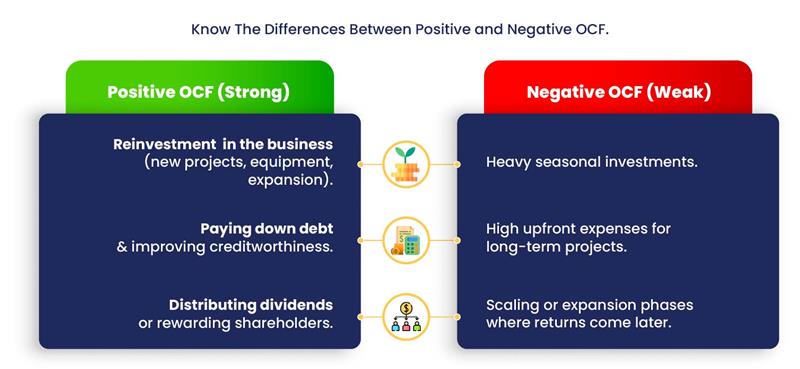
When a business shows positive operating cash flow, it means the money it makes from regular activities is more than what it spends to keep things running. This is a good sign that the company is stable. Companies that have positive OCF can afford to grow, buy new equipment, pay off loans, and handle unexpected problems without rushing to find money from outside sources. In essence, the business can support itself.
On the other hand, negative operating cash flow shows that core operations are using up more cash than they bring in. If this keeps happening, it’s a red flag. The company might look profitable on paper but have trouble getting paid too much inventory, or high running costs. While negative OCF can be okay for a short time during growth periods ongoing cash flow problems almost always need fixing.
What are OCF Ratios?
Looking at operating cash flow by itself can be misleading. In 2026, lenders and investors rely more on ratios based on cash flow to check how well a business can handle tough times.
How to Boost Your Operating Cash Flow?
To improve operating cash flow, you don’t need big, one-time fixes. It comes from careful, step-by-step improvements in daily operations.
1. Better Inventory Control Releases Cash
Cash often gets stuck in inventory more than anywhere else. Too much stock locks up working capital, makes storage pricier, and might lead to outdated goods. By 2026, companies that adjust their inventory on the fly will do better than those stuck with old buying patterns.
Using plans based on what employees want and keeping a close eye on how fast inventory moves helps make sure money isn’t just sitting there. These days many businesses use tools that predict sales, which are part of their accounting or big computer systems, to buy based on real needs. Even small improvements in how inventory turns over can free up a lot of cash to use.
2. Getting Paid Faster Boosts Available Cash
Sales don’t boost cash flow until companies get paid. Slow payments remain one of the biggest drains on operating cash flow for B2B companies.
Clear billing practices well-defined payment terms, and consistent follow-ups are crucial. In 2026, automation has a big impact here. Companies that use accounting software with automated reminders and real-time receivables tracking collect money faster than those that rely on manual processes.
Some companies also offer early-payment discounts when their margins allow it. While this cuts revenue per invoice, the better cash flow often makes up for the cost.
Refer More: How Payroll Can Integrate Your HR And Accounting Software For Seamless Operations.
How to Handle Accounts Payable Without Hurting Relationships?
Accounts payable stands for money you haven’t paid yet. When used rightly, it can boost short-term cash without hurting your relationships with suppliers.
Working out practical payment terms and matching payment times with cash coming in helps keep your operating cash flow steady. The aim isn’t to put off payments, but to make sure money going out lines up with money coming in. In 2026, suppliers are ready to talk things through when you keep communication clear and steady.
Read More: In Using Accounting Software And Its Step-By-Step Process Which Makes Your Cash Flow Easier.
Every unneeded operating cost cut into cash flow. Looking over expenses helps spot costs that don’t add enough value to the business anymore.
This doesn’t always mean making deep cuts. Often, you can save a lot by talking to service providers again using fewer vendors or changing how you use things. The quality stays the same. Companies that look at their running costs every three months, not just once a year keep more cash on hand over time.
Transform Complex Cash Flow Into Clear Business Decisions With Our Advanced Accounting Software!
Why Being Good with Operating Cash Flow Is More Important in 2026?
Shaky economy more rules to follow that cost money, and harder to get loans have changed how businesses work. Just making a profit doesn’t make employees feel safe anymore. Having steady cash flow does.
A healthy cash flow gives companies room to breathe. It speeds up choices, cuts back on borrowing needs, and earns trust from banks, investors, and staff. On the flip side poor cash flow—even in companies that make money—causes worry, holds back growth, and ups money risks.
To Wrap Up: Making Cash Flow Your Secret Weapon
Cash flow isn’t just a number on a sheet. It shows in real-time how well your business turns work into money power. By knowing what drives cash flow and making smart tweaks to stock, bills, payments, and costs, companies can change cash flow from a constant worry into something that puts them ahead of the pack.
In 2026, companies that succeed won’t just sell more—they’ll manage their money better.
Do you want to see your cash flow more or make cash-related tasks easier with new accounting tools? Our team can guide you to take the next step with confidence. Get in touch now and start building a stronger financial base.
OCF Frequently Asked Questions
What is operating cash flow (OCF)?
Operating cash flow means the money a business makes from its main activities, like selling products or offering services. It shows real money movement, not just profit on paper, and tells us if a company can keep running day-to-day without needing outside money.
Why is operating cash flow more important than profit?
Profit depends on accounting rules and might include money not yet received in cash. Operating cash flow, however, shows actual liquidity. A company can report profits but still face financial troubles if cash doesn’t come in on time or if expenses aren’t managed well.
What causes negative operating cash flow?
Negative operating cash flow often happens because of slow-paying customers too much inventory high running costs, or poor expense management. Short-term negative OCF can happen during growth, but long-lasting negative cash flow points to operational problems that need quick fixing.
How can a business improve operating cash flow?
A company can boost its operating cash flow by speeding up customer payments keeping inventory at optimal levels, talking to suppliers about payment terms, and cutting unnecessary operating costs. Using automated accounting systems also helps to make things more accurate and gives a clearer picture of cash.
