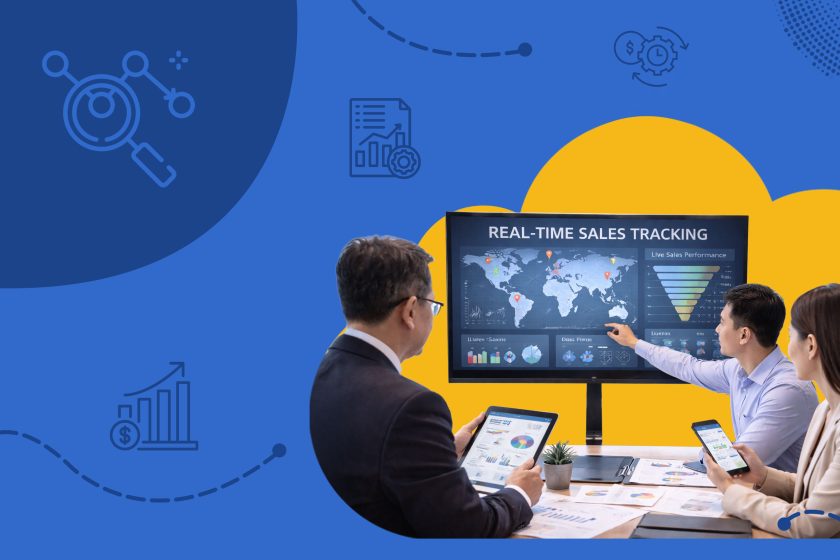
If you talk to any experienced sales manager today, you’ll notice something interesting—they’re no longer obsessed with reports. Not because reports aren’t important, but because by the time those reports arrive, the story is already old.
Sales has changed. It’s faster, noisier, and far less forgiving than it used to be. And in this kind of environment, relying on yesterday’s data to make today’s decisions just doesn’t work anymore.
That’s where real-time tracking quietly steps in—not as a flashy feature, but as something that fundamentally changes how sales teams operate.
Why Real-Time Tracking is Important?
There was a time when end-of-week reviews felt sufficient. Managers would sit down, look at numbers, try to understand what happened, and plan the next move.
But here’s the problem: by then, the damage is already done.
A deal that stalled three days ago? Cold.
A lead that didn’t get a follow-up? Probably gone.
Real-time tracking flips this entire approach. Instead of analyzing what went wrong after the fact, you can actually catch things as they start to slip. That one delayed follow-up, that inactive lead, that deal sitting untouched—it all becomes visible immediately.
And that changes everything.
How Real-Time Tracking Can Help?
One of the biggest frustrations in sales management is the gap between what you think is happening and what’s actually happening.
Reps say they’re following up. Pipelines look healthy on paper. But without real visibility, you’re often guessing.
With real-time tracking, there’s no guesswork.
You can see who’s actively engaging with prospects, who’s letting leads sit too long, and where deals are slowing down. It’s not about micromanaging—it’s about clarity.
And interestingly, when people know their work is visible, they naturally become more consistent. Not because they’re being watched, but because expectations are clearer.

Why Speed Matters More Than Strategy?
Most companies don’t lose deals because they have a bad strategy. They lose because they were too slow.
Too slow to respond.
Too slow to follow up.
Too slow to act when something felt “off.”
Real-time tracking gives teams the ability to react instantly. A hot lead comes in? Assigned immediately. A deal shows signs of going cold? Someone steps in. A rep is overloaded? Work gets redistributed.
It’s small actions like these, taken at the right time, that make a huge difference over a quarter.
 ChatGPT
 Claude
 Perplexity
How It Takes Pressure Off Your Sales Team?
At first glance, tracking everything in real time might sound stressful for sales reps. But in reality, it often has the opposite effect.
Think about how much time reps usually spend updating spreadsheets, sending status updates, or trying to remember what happened with each prospect.
Now imagine all of that happening automatically in the background.
They don’t have to “prove” they’re working—the system already shows it. That frees them up to focus on what actually matters: conversations, relationships, and closing deals.
Managers benefit too. Instead of constantly asking for updates, they can spend that time coaching, helping, and actually supporting the team.
How Sales Forecasting is Not a Guessing Game?
Let’s be honest—sales forecasts have always been a bit… optimistic.
Not intentionally, but because they’re often based on outdated information or incomplete updates. A deal looks “likely” simply because no one has checked in recently.
Real-time tracking changes that tone completely.
When you can see the latest activity—calls, emails, responses—you get a much clearer picture of how real a deal actually is. Forecasts start reflecting reality instead of hope.
And that makes planning a whole lot easier.
How Will Customers Feel the Difference?
From a customer’s point of view, they don’t see your dashboards or tracking systems. But they definitely feel the impact.
They notice when responses are quick.
They notice when nothing slips through the cracks.
They notice when conversations feel continuous instead of disconnected.
That consistency builds trust. And in sales, trust often matters more than price or features.
How Coaching Becomes More Real?
Generic feedback like “try to follow up faster” doesn’t help anyone.
But when you have real-time data, coaching becomes specific. You can point out exactly where a deal slowed down, where a response was delayed, or which actions are leading to better results.
It’s no longer about opinions—it’s about patterns.
And when reps see those patterns clearly, improvement happens much faster.
How the Right Tools Work?
Of course, none of this happens manually. The reason real-time tracking works so smoothly today is because of how modern tools are built.
A good CRM Software quietly captures everything—interactions, updates, deal movements—without forcing people to constantly input data. It connects the dots across the entire sales cycle so managers and reps are always looking at the same, up-to-date picture.
When done right, it doesn’t feel like “tracking.” It just feels like everything is finally organized and visible.
Why Does This Matter Now?
Because the pace of business isn’t slowing down.
Customers expect quick responses. Competitors are always one step away. And sales cycles are becoming more dynamic than ever.
In that kind of environment, relying on delayed information is like driving while looking in the rearview mirror.
Real-time tracking isn’t just helpful anymore—it’s becoming the baseline. The teams that embrace it aren’t necessarily working harder… they’re just reacting faster, deciding smarter, and missing fewer opportunities.
And right now, that’s what makes all the difference.
Frequently Asked Questions
What are the most essential CRM software features for businesses today?
The most essential CRM software features include centralised customer data, automation, sales pipeline tracking, lead management, and analytics. These features help businesses improve efficiency, maintain consistent communication, and make better decisions based on real-time insights.
Why is CRM software important for growing businesses?
CRM software helps growing businesses manage increasing volumes of customer data, track interactions, and streamline processes. Without it, businesses often struggle with disorganisation, missed opportunities, and inconsistent customer experiences.
How does CRM automation improve productivity?
Automation reduces the need for manual tasks such as follow-ups, data entry, and task assignments. This allows teams to focus more on sales and customer engagement, improving overall productivity and consistency.
Can CRM software be customised for different industries?
Yes, most modern CRM systems offer customisation options such as workflows, fields, and dashboards. This allows businesses to adapt the system to their specific processes and industry requirements.
