

In this article
- 1. What Is Garden Leave?
- 2. How Does Garden Leave Work?
- 3. Why Do Companies Use Garden Leave?
- 4. What Are the Benefits Of Garden Leave For Employers?
- 5. How Long Does Garden Leave Last?
- 6. What Is Garden Leave Like For Employees?
- 7. What Should You Do If You Are Put On Garden Leave?
- 8. How Can HR Software Make Garden Leave Easier To Manage?
- 9. Garden Leave FAQs
What Is Garden Leave?
Garden leave is something you might see in a job contract. It means when you resign or leave a company, you don’t have to go to work anymore, but you still get paid for some time.
The term actually comes from the UK. The idea was that instead of going to the office, you stay at home… maybe even spend time in your garden. That’s how the name stuck.
Now, it’s used in places like Hong Kong too, mostly for people in important roles or jobs where they handle sensitive information.
How Does Garden Leave Work?
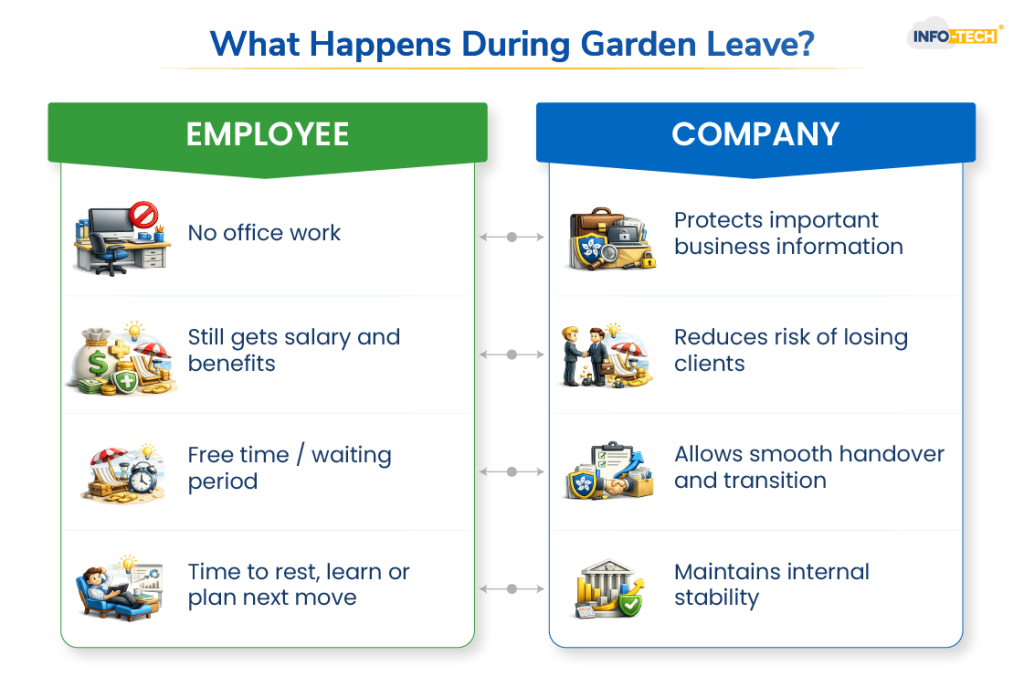
It’s pretty simple. You’re still an employee on paper, but you’re not working anymore.
You don’t go to the office, you don’t take calls, and you don’t deal with clients or projects. But your salary continues as usual.
So in a way, it’s like you’ve left the job… but not fully yet.
Why Do Companies Use Garden Leave?
Companies don’t just do this randomly. There’s usually a reason behind it.
When someone leaves, especially from a key role, there’s always a chance they might take important information or clients with them. So instead of letting them continue working during notice period, companies ask them to stay away.
It also gives the team some time to adjust and handle the workload without confusion.
What Are the Benefits Of Garden Leave For Employers?
For companies, this setup actually helps in a few ways.
It keeps important business information safe because the employee is no longer involved in day-to-day work. It also reduces the chance of clients moving away with that employee.
At the same time, the team gets a bit of breathing space to figure things out after someone leaves. It’s less chaotic compared to a sudden exit.
How Long Does Garden Leave Last?
There’s no fixed rule for this. It depends on the company and the role.
In most cases, it can be a few weeks or a couple of months. For higher roles, it might be longer.
Basically, the more important the position, the longer the garden leave can be.
What Is Garden Leave Like For Employees?
Honestly, it can feel a bit strange. On one side, you’re getting paid without working, which sounds great. You suddenly have a lot of free time. But at the same time, you can’t really jump into a new job immediately, and that can feel frustrating.
Some people enjoy the break. Others just want to move on quickly. It depends on the person.
In finance jobs, senior employees are often asked to stay away before joining another company. For sales roles, people may not be allowed to talk to clients after they resign. In tech companies, system access is usually removed right away.
Different industries handle it differently, but the idea is always the same—protect the company during the transition.
What Should You Do If You Are Put On Garden Leave?
If this happens to you, the best thing is to use the time well.
You can update your CV, start learning something new, or plan your next move. Some people even take a short break to relax before starting again.
It’s not permanent, so it helps to treat it as a short pause in your career.
How Can HR Software Make Leaves Easier To Manage?
From a company side, handling all this manually can get messy. That’s where HR software comes in. It helps track who is on notice period, who is on garden leave, and what needs to be done next. Payroll, access control, and records can all be managed in one place.
Instead of chasing emails or spreadsheets, everything is organised, which makes life easier for HR teams. Contact us today!
Garden Leave FAQs
What is garden leave in Hong Kong?
Garden leave in Hong Kong is when an employee stays away from work during their notice period but continues to receive full pay.
What does it mean when you are on garden leave?
It means you’re still employed and getting paid, but you’re not allowed to work or attend the workplace for a period of time.
How do you ask for garden leave?
You can professionally ask, “Can I be placed on garden leave during my notice period?”
Can you tell people you’re on garden leave?
Yes, you can say you’re on garden leave, but it’s best to avoid sharing any details about your company or situation.
