

In this article
- 1. How TIN Quietly Affects Every Business in Hong Kong?
- 2. What Is a TIN in Hong Kong Actually Used For?
- 3. Why Do Most Business Owners Ignore TIN in the Beginning?
- 4. Why Are Banks in Hong Kong So Particular About TIN Information?
- 5. How Does TIN Affect Online Businesses and International Payments?
- 6. Why Do Foreign Entrepreneurs Get Confused About TIN in Hong Kong?
- 7. Is TIN Only Important for Taxes?
- 8. Why Will TIN Matter Even More in the Future?
- 9. TIN Frequently Asked Questions
How TIN Quietly Affects Every Business in Hong Kong
Starting a business in Hong Kong sounds straightforward when you first look into it. The process is fast, the city is business-friendly, and almost every guide online talks about low taxes and easy company setup. But what many people do not realize is that one small detail quietly follows the business from the very first day onward, the TIN.
Most founders barely pay attention to it at the beginning. It feels like just another number buried inside registration documents. Something for accountants to handle later. But over time, the TIN slowly becomes connected to almost everything a business does.
And usually, people only realize that after running into problems.
What Is a TIN in Hong Kong Actually Used For?
In simple terms, the TIN is the number tied to your business for tax and identification purposes. In Hong Kong, this is commonly linked to the Business Registration Number issued after company registration.
Sounds harmless enough.
But this number quietly appears across tax filings, banking records, invoices, financial documents, and even international payment systems. It becomes part of the business identity whether the owner pays attention to it or not.
Think of it this way. A company name can change. Directors may change. Business activities may evolve. But the TIN remains one of the few things constantly attached to the company record.
That is why institutions rely on it heavily.
Why Do Most Business Owners Ignore TIN in the Beginning?
Because honestly, when someone starts a business, compliance is usually the last thing on their mind.
People are busy finding customers, building websites, designing logos, chasing sales, and figuring out how to survive the first year. Nobody wakes up excited to organize tax identification records.
The problem is that businesses today operate in a much more connected environment than before.
Years ago, small inconsistencies in company paperwork might never have been noticed. Today, systems cross-check information constantly. Banks review company records more carefully. Payment platforms ask for verification documents. International transactions trigger extra checks.
Suddenly, the TIN that nobody cared about starts becoming important everywhere.
Why Are Banks in Hong Kong So Particular About TIN Information?
This is probably where many business owners first feel the pressure.
Opening a corporate bank account in Hong Kong is not as effortless as it used to be. Banks have become cautious, especially with companies involved in overseas business, digital services, trading, or online payments.
And from the bank’s perspective, it makes sense.
They want to know whether the company is properly registered, whether the business activity matches the paperwork, and whether everything lines up correctly. The TIN helps them connect those details together.
If there are inconsistencies, even small ones, things slow down.
Maybe the company address is written differently across documents. Maybe old records were never updated properly. Maybe the registration information submitted to a payment provider does not perfectly match banking details.
None of these issues sound dramatic on their own. But together, they create friction.
And once compliance teams start asking questions, simple approvals can suddenly take weeks.
How Does TIN Affect Online Businesses and International Payments?
This part surprises many people.
A lot of Hong Kong businesses today are fully digital. They are Amazon sellers, Shopify store owners, consultants, agencies, freelancers, or SaaS founders working with overseas clients.
These businesses may never open a physical office. Some barely operate inside Hong Kong itself.
But the moment money starts moving internationally, verification becomes unavoidable.
Platforms like Stripe, PayPal, Amazon, and various marketplaces now ask businesses for tax-related information much more frequently than before. Sometimes it is for regional regulations. Sometimes it is part of global reporting rules. Sometimes it is simply risk management.
Whatever the reason, the TIN often becomes part of the process.
And when records do not match properly, payouts may get delayed, accounts may require additional reviews, or businesses may be asked to submit more documentation unexpectedly.
For companies depending on steady cash flow, this can become stressful very quickly.
Why Do Foreign Entrepreneurs Get Confused About TIN in Hong Kong?
One reason is that every country handles tax identification differently.
Some countries issue separate tax numbers entirely. Others have multiple registration systems depending on the business structure. So when overseas founders set up companies in Hong Kong, many assume the process works the same way they are used to back home.
That confusion creates mistakes.
Some people enter the wrong registration number on forms. Others misunderstand which number should be used during tax reporting or payment verification. Sometimes businesses accidentally submit inconsistent details across different platforms without realizing it.
Most of the time, these are not serious violations. They are simply administrative mistakes.
But unfortunately, systems do not always see the difference immediately.
Is TIN Only Important for Taxes?
Not anymore.
That is probably the biggest misunderstanding businesses still have.
Years ago, the TIN mostly mattered during tax filing season. Today, it has become tied to much broader compliance checks. It helps banks, financial institutions, marketplaces, and even international partners confirm that the business is legitimate and properly documented.
In many ways, it has quietly become part of corporate trust.
Businesses with organized records usually move through processes faster because everything aligns cleanly. Businesses with messy documentation histories often face repeated checks, even if they have done nothing wrong.
The strange part is that most founders never notice this difference directly. They just experience one business running smoothly while another constantly faces delays.
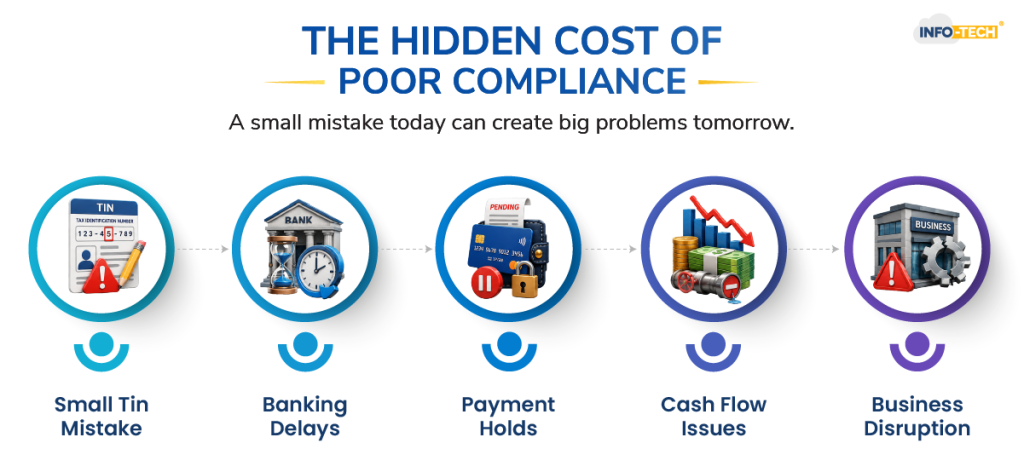
Why Small Record Mistakes Become Bigger Problems Later
One of the easiest ways businesses create trouble for themselves is through inconsistency.
A slightly different company name on invoices. An outdated address that was never updated properly. Old registration details still floating around on payment platforms. Different versions of business information submitted over time.
At first, none of it feels important.
But eventually, businesses grow. They apply for larger payment limits. They expand overseas. They work with investors. They go through audits. And suddenly, people start examining records more carefully.
That is usually when founders realize how much those small details matter.
Fixing old compliance issues is always harder than maintaining clean records from the start.
Why Will TIN Matter Even More in the Future?
Business systems are becoming more digital every year. Verification checks are becoming faster, stricter, and more automated.
Hong Kong is still one of the best places in Asia to start a business, but global compliance expectations are changing everywhere. Financial institutions now share more information. Payment systems review businesses more carefully. International reporting rules continue evolving.
Because of this, the role of TIN will likely become even more important over time.
Not in a dramatic way that business owners suddenly notice overnight. More quietly than that.
It will simply become one of those things that determines whether processes move smoothly or become unnecessarily complicated.
So Why Should Businesses Take TIN Seriously From Day One?
Because by the time problems appear, fixing them is usually frustrating.
The TIN may look like a small administrative detail during company registration, but it slowly becomes attached to almost every serious business activity later on. Banking, payments, taxes, compliance reviews, overseas expansion, all of it eventually connects back to the company’s records.
And in business, clean records create trust faster than most people realize.
Not flashy branding. Not impressive presentations. Just consistent, reliable information that makes institutions comfortable working with the company.
Businesses using integrated accounting and compliance software often find it easier to maintain accurate records because important information stays centralized instead of being scattered across emails, spreadsheets, and disconnected systems. This is one reason many growing businesses now rely on Payroll Software, Accounting Software, and CRM Software to reduce documentation mistakes and manage compliance more smoothly as operations expand.
That is why smart businesses treat compliance properly from the beginning, even when nobody is paying attention yet.
TIN Frequently Asked Questions
What is a TIN in Hong Kong?
A TIN in Hong Kong refers to the Tax Identification Number used for tax and business identification purposes. For most companies, the Business Registration Number issued by the Inland Revenue Department serves as the TIN.
Is TIN mandatory for business registration in Hong Kong?
Yes. Every registered business in Hong Kong receives a Business Registration Number, which functions as the company’s TIN for tax filings, banking, and compliance-related processes
Why do banks ask for TIN information in Hong Kong?
Banks use TIN details to verify company records, conduct compliance checks, and ensure the business information matches official registration documents before approving corporate accounts or transactions.
Can incorrect TIN details affect online payment platforms?
Yes. Incorrect or mismatched TIN information can lead to verification delays, restricted payouts, or additional compliance reviews on platforms like Stripe, PayPal, Amazon, and Shopify.
