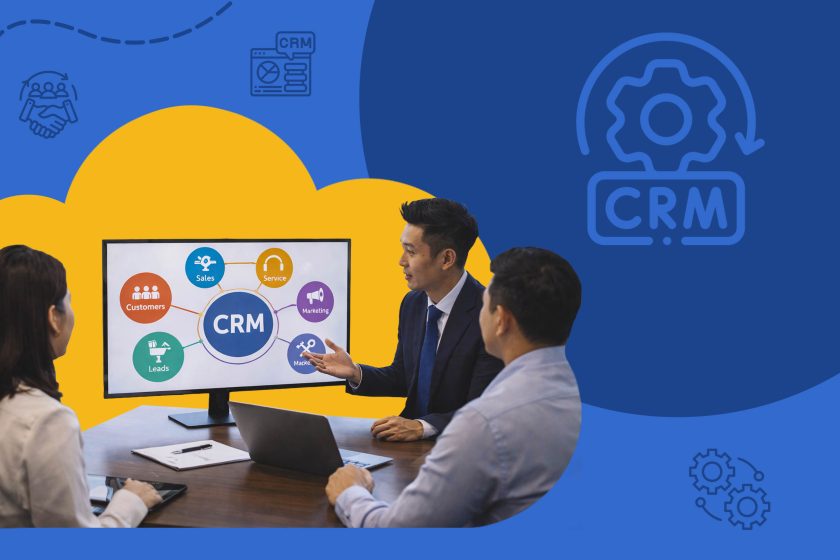
What Is CRM (Customer Relationship Management)?
Let’s be honest—when people first hear the term CRM, it sounds a bit technical, maybe even intimidating. But the actual CRM meaning is much simpler than it seems.
At its heart, CRM (Customer Relationship Management) is just about how a business keeps track of its customers and builds better relationships with them over time.
Now, instead of doing that through scattered Excel sheets, sticky notes, or trying to remember conversations (which never really works), businesses use CRM systems to organise everything in one place. Every email, call, follow-up, purchase—basically every interaction—gets recorded and stored.
And that changes everything.
Because when you can actually see the full picture of your customer, you don’t just react—you start making smarter decisions. You follow up at the right time, you personalise your communication, and you stop missing opportunities.
So yes, CRM is software. But more than that, it’s a smarter way of running your business.
What CRM Really Means?
If we break down the CRM meaning, it’s not complicated:
| Part | What It Actually Means |
| Customer | The people or businesses you deal with |
| Relationship | The connection you build over time |
| Management | How you track and improve those interactions |
Put together, CRM is really about managing your relationships in a way that’s organised, consistent, and scalable.
Why CRM Matters?
A lot of businesses don’t realise they need a CRM… until things start slipping.
Leads go cold. Follow-ups get forgotten. Different teams say different things to the same customer. And suddenly, what looked like “small gaps” start affecting revenue.
This is where CRM quietly becomes one of the most important systems in your business.
With a proper CRM in place, you can:
- Keep track of every lead without relying on memory
- Respond faster because everything is already documented
- Personalise conversations instead of sending generic replies
- Make sure no opportunity falls through the cracks
- Build stronger, longer-lasting customer relationships
It’s not about doing more work—it’s about doing things better and more consistently.
What Does a CRM System Actually Do?
A good CRM doesn’t just “store data”—it helps you use it.
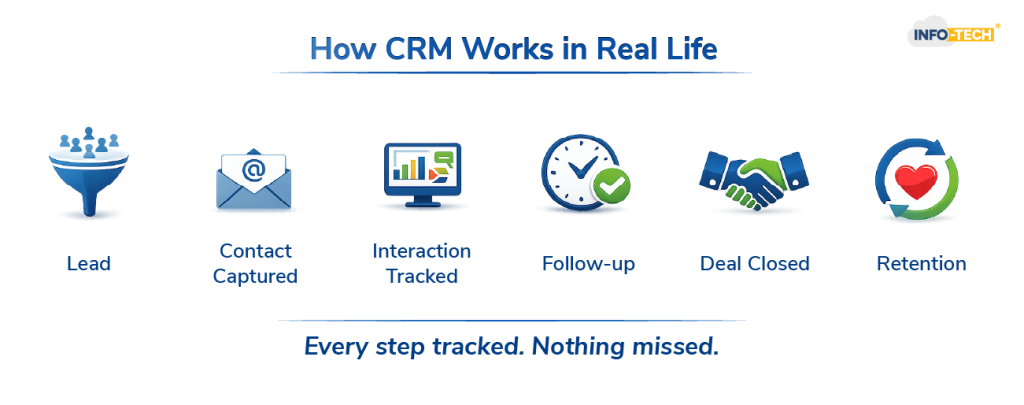
Here’s what that looks like in real life:
- Keeps All Customer Information in One Place
No more digging through emails or asking colleagues for updates. Everything is there when you need it.
- Shows You Where Your Sales Stand
You can instantly see which deals are progressing, which are stuck, and which need attention.
- Reminds You to Follow Up
Because let’s face it—manual follow-ups are easy to forget.
- Gives You Useful Insights
Not complicated reports, but clear information on what’s working and what’s not.
- Connects With Your Other Tools
Whether it’s email, accounting, or marketing platforms, everything works together instead of in silos.
What are the Different Types of CRM?
Not all CRM systems are built the same, and understanding this helps you choose better.
| Type | What It Focuses On | Who It’s For |
| Operational CRM | Daily tasks like sales and follow-ups | Teams that want efficiency |
| Analytical CRM | Data and customer insights | Businesses that rely on data |
| Collaborative CRM | Sharing information across teams | Companies with multiple departments |
Most modern systems actually combine all three to some extent.
How CRM Actually Helps Your Business Grow?
This is where the real value shows up—not in features, but in results.
- You Stop Losing Customers
Because you’re actually keeping track of them and staying in touch.
- Your Sales Process Becomes Smoother
Less confusion, fewer delays, and better visibility.
- Decisions Become Easier
You’re not guessing—you’re looking at real data.
- Your Team Works Better Together
Everyone is on the same page, which reduces mistakes and duplication.
What Happens When You Don’t Use CRM?
This is something many businesses only realise the hard way.
- Customer details get lost or outdated
- Follow-ups are inconsistent
- Teams don’t have the same information
- Customers get frustrated with repeated questions
- Opportunities quietly disappear
And none of these issues happen suddenly—they build up over time.
How to Choose the Right CRM?
You don’t need the “most advanced” CRM. You need the one that fits your business.
Look for something that:
- Is easy for your team to actually use
- Can adapt to your workflow
- Integrates with your existing tools
- Can grow as your business grows
- Gives you clear, useful insights (not just data overload)
If your team avoids using it, even the best CRM won’t help.
Where CRM Is Headed Next?
CRM is evolving quickly, and it’s becoming more intuitive than ever.
We’re already seeing:
- Systems that predict customer behaviour
- AI helping with responses and follow-ups
- More personalised communication at scale
- Real-time syncing across all platforms
In simple terms, CRM is moving from “tracking customers” to understanding them better than ever before.
Conclusion
So, when we talk about CRM meaning, we’re not just talking about software.
We’re talking about having clarity in your customer relationships, consistency in your processes, and confidence in your decisions.
Businesses that use CRM well don’t just stay organised—they grow faster, serve better, and build stronger connections.
If you’re looking for a solution that goes beyond just CRM, Info-Tech offers integrated systems that combine CRM software with HR, payroll, and accounting—so you’re not just managing customers, but your entire business in one connected ecosystem.
CRM Frequently Asked Questions
What is CRM meaning in simple terms?
CRM refers to Customer Relationship Management, which is how businesses track, manage, and improve their interactions with customers using systems and strategies.
Why is CRM important?
CRM helps businesses stay organised, improve customer communication, and increase sales by ensuring no leads or opportunities are missed.
Is CRM only for big companies?
Not at all. Small and growing businesses benefit just as much—sometimes even more—because it helps them scale efficiently.
What does a CRM system do?
It stores customer data, tracks interactions, automates follow-ups, and provides insights to help businesses make better decisions.
