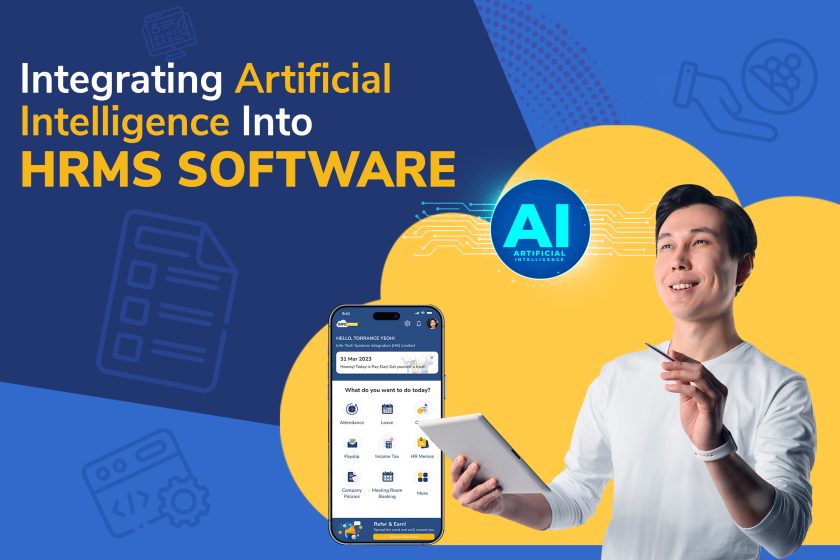
AI isn’t just a buzzword in HRMS management anymore. It’s now a key part of daily HRMS tasks—making hiring better, streamlining work, and helping HR teams make smarter choices. Back in the day, employees worried AI might take jobs. But in 2025–2026, we see a different picture: AI helps HR do more, not less.
In today’s companies, HR departments juggle many tasks. These include hiring, following rules, paying employees, checking performance, and keeping employees happy. As teams grow larger and laws get stricter old ways of doing things – like using paper or basic computer files – just don’t cut it anymore. This is where AI-powered HRMS software comes in handy. It acts like a smart helper making work faster more accurate, and giving better insights.
This article talks about how AI fits into HRMS software how it changes HR work in real life, and why we still need employees to keep an eye on things.
Why Companies Need AI in Their HRMS Software
HR teams handle large amounts of data and routine paperwork tasks. This leaves them little time to focus on strategy. AI acts as an extra set of hands for HR helping systems work faster, spot trends, and back up smarter choices.
Unlike old-school automation, AI-powered HRMS software doesn’t just follow rules—it grows smarter from data. This lets HR shift from fixing problems after they happen to planning ahead for the workforce. This is especially true for hiring talent keeping employees, and boosting performance.
In busy markets like Hong Kong where rules are strict and employees come from all walks of life, AI-driven HRMS tools give companies the flexibility they need to grow the right way.
How Artificial Intelligence Is Transforming HRMS Operations
1. Reducing Bias and Improving Decision-Making
Even with good intentions, employees’ choices can be swayed by hidden biases. This affects hiring and employee reviews leading to uneven results. AI tackles this issue by checking applicants and employees against set, job-specific standards instead of gut feelings.
AI doesn’t get rid of all bias, but it cuts down on differences by using the same approach across lots of data. This helps create fairer shortlists unbiased performance checks, and clearer HR steps—as long as humans still keep an eye on things.
2. Making Routine HR Tasks Automatic
AI in HRMS software shows its worth through automation. Jobs like setting up interviews, handling time off requests, updating employee info, and creating regular reports don’t need constant hands-on work anymore.
By making these tasks automatic, HR teams cut down on mistakes, speed up their work, and open up time to focus on more important things like helping employees grow, planning new policies, and building a strong company culture.
3. Smarter Data Collection and Analysis
HRMS software systems already keep loads of employee information. AI makes this data more useful by spotting trends that would take employees a long time to find on their own.
For instance, AI can spot patterns in when employees miss work, guess who might quit soon, or show where different departments need new skills. These insights help HR leaders make choices based on facts instead of guessing or doing things the old way.
4. AI-Powered Chatbots for HR Support
Chatbots powered by AI are now common features in HRMS platforms. These digital helpers answer routine questions from employees and job candidates. They provide information on leave balances, company policies onboarding steps, and updates on application status.
These chatbots give quick answers around the clock, which enhances the employee experience. They also cut down on administrative work for HR teams. Human HR professionals still handle more complex or sensitive issues striking a balance between automation and personal touch.
5. Advanced Workforce Analytics and Forecasting
In 2025–2026, AI-driven HR analytics has gone beyond basic reporting. Modern HRMS software now uses predictive analytics to forecast workforce needs. It also assesses future skill requirements and models different scenarios for the organization.
This gives companies the ability to get ready for expansion, handle succession plans, and match HR tactics with business goals—changing HR from an operational role to a strategic ally.
AI vs Traditional HRMS: A Practical Comparison
| Area | Traditional HRMS | AI-Integrated HRMS |
| Decision Support | Manual analysis | Predictive, data-driven insights |
| Recruitment Screening | Keyword-based | Skill and pattern-based matching |
| Administrative Tasks | Largely manual | Automated and self-learning |
| Employee Queries | HR-dependent | AI chatbots with escalation |
| Workforce Planning | Historical reporting | Forecasting and scenario modelling |
The Role of Human Oversight in AI-Driven HRMS
Even with its benefits, AI isn’t a complete answer on its own. HR choices often need subtle understanding ethical thinking, and background knowledge that tech can’t grasp by itself. AI systems work within the limits humans set for them and need constant checking to make sure they’re accurate, follow the rules, and keep data private.
In Hong Kong where laws about protecting personal info are tough, HR teams must make sure AI systems follow PDPO rules and handle sensitive employee data.
The best HRMS setups see AI as a tool to work with, not a substitute—mixing machine speed with human smarts.
Final Thoughts: AI and HR Working Together
AI in HRMS software has changed the way HR teams work. It speeds up hiring and gives smarter insights helping HR staff to work better and think ahead.
But AI’s real worth comes from teamwork, not just doing things on its own. When you mix AI with employees’ know-how ethical checks, and clear rules, AI-powered HRMS software helps companies succeed.
As work changes, companies that use AI in their HRMS systems will be in a better spot to find good employees, follow the rules, and build strong teams ready for what’s next.
Frequently Asked Questions:
Will AI in HRMS take HR jobs?
No. AI helps HR teams by taking over routine tasks and giving insights, but human judgment stays key to make decisions.
Is AI in HRMS safe for employee data?
Yes when set up right. Good HRMS platforms use code scrambling, limit who can see what, and follow data protection rules like Hong Kong’s PDPO.
Can AI cut down bias in hiring?
AI can lower inconsistency and hidden bias by using the same rules for everyone, but it needs careful setup and regular checks.
Which HR jobs get the most out of AI?
Sorting job applicants looking at employee data, planning the workforce, and delivering HR services see the biggest gains.
